
Published May 28, 2026
Raleigh Relocation: Where 76 People Move Every Single Day!

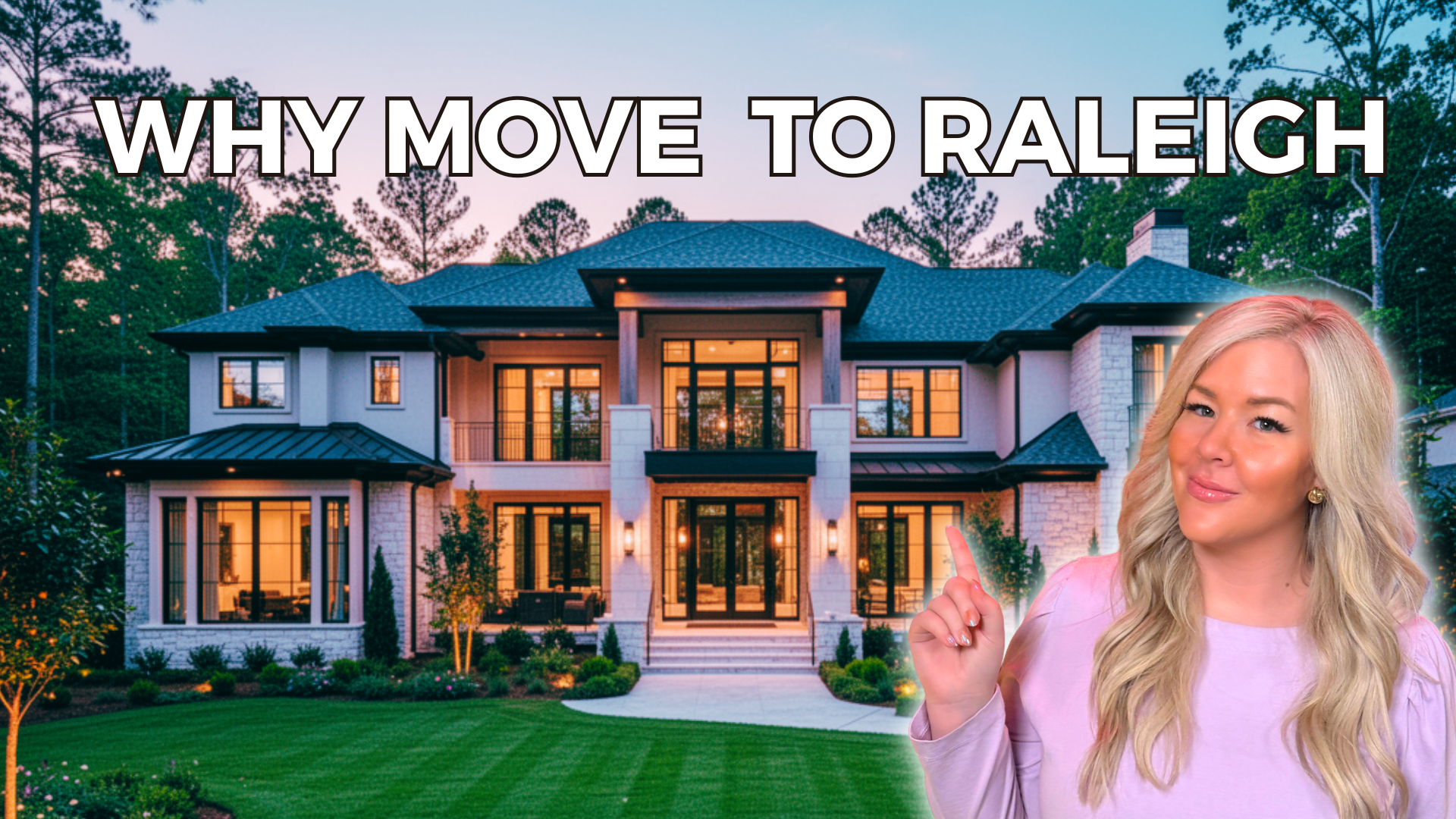
Who's Moving to Raleigh — and Exactly Where They're Landing
About 76 people move to the Raleigh area every single day — but there's a bigger pattern underneath that number. People aren't just moving to Raleigh. They're moving to specific zip codes for specific reasons.
The variety across Raleigh's different areas is one of the region's biggest advantages, but it also creates real anxiety about picking the wrong place — something we've watched happen more than a few times. It's genuinely hard to figure out on your own, which is exactly why our team was built around matching buyers to the right spot for them.
In this post, we break down where people are moving from, where they're landing around Raleigh, why they're leaving their old cities, and how these migration waves are reshaping the Triangle. You can also watch the full video walkthrough here: Everyone is Moving to Raleigh (YouTube).
The One Factor Connecting Every Migration Wave
According to Redfin and U-Haul migration data, Raleigh's largest inbound migration comes from Washington, D.C., New York City, Boston, Philadelphia, San Francisco, Seattle, Los Angeles — and, believe it or not, Fayetteville, North Carolina.
Every one of those streams is connected by a single factor: housing economics. The median Raleigh-area home price now sits around $450,000. Compare that to Northern Virginia, New Jersey, Long Island, or Silicon Valley, where median prices often run from $800,000 to well over $2 million.
For many families, moving to Raleigh feels like upgrading their entire life. They sell older, smaller homes with tiny yards and massive property tax bills, then arrive here and buy newer construction with more square footage, bigger yards, lower taxes, and better weather. Layer in strong tech growth, a deep job market, excellent colleges and universities, and a high overall quality of life — and the appeal is obvious.
But different groups are moving here for different reasons. Here's where each is landing.
Relocation Area 1: The D.C. Pipeline → North Raleigh, Cary & Morrisville
Washington, D.C. has become the single largest inbound migration source feeding Raleigh, per Redfin — and the reasons are clear. In Northern Virginia and the D.C. suburbs, traffic is brutal, housing prices have exploded, and property taxes are high. Many families feel trapped paying enormous mortgages for relatively modest homes. Then remote and hybrid work changed everything.
That shift triggered a migration wave into North Raleigh, Cary, and Morrisville — especially zip codes 27614, 27615, 27519, and 27560.
The math tells the story. In Northern Virginia, $800,000 might buy a 2,000-square-foot home with a tiny yard, older construction, and a brutal commute. In North Raleigh, that same budget often buys 4,000 square feet on a half-acre lot with mature trees, newer construction, top schools, and dramatically lower taxes. These buyers weren't just chasing cheaper homes — they were after more space, less congestion, and less stress.
Relocation Area 2: The Northeast → Wake Forest, North Raleigh, Cary & Apex
New York, New Jersey, and Pennsylvania migrants have become one of the Triangle's dominant relocation groups, and the drivers are simple: cost and lifestyle.
In many New York suburbs, median home prices exceed $1 million and property taxes can run $20,000–$30,000 a year, on older homes with tiny lots and long winters. Arriving in Raleigh, those buyers find homes that cost half as much, taxes that collapse, far larger yards, and an immediately better climate — no more four or five straight months of shoveling snow.
Because many Northeast migrants arrive with large amounts of home equity, they can compete aggressively here. That's one reason Wake Forest, North Raleigh, Cary, and Apex appreciated so quickly — especially zip codes 27614, 27615, and 27587. Many of these families buy 3,000–5,000-square-foot homes on a quarter-acre to one-acre lot for $500,000–$800,000; in New York or New Jersey, that same lifestyle might cost several million.
The most common complaint we hear from Northeast transplants? The lack of authentic international food — and good New York–style pizza and delis. You won't find much of that in North Raleigh or Wake Forest, which is exactly why Cary makes this list: outside of Durham and Chapel Hill, it offers the widest variety of food choices in the area.
Relocation Area 3: The Tech Migration → West Cary, Morrisville, Brier Creek & RTP
California migration into Raleigh isn't primarily retirees — it's tech workers. This wave accelerated dramatically after the rise of remote work, RTP expansions, and major announcements involving Apple, Google, and broader engineering growth across the Triangle. Even discussions around Apple's RTP expansion fueled speculation and interest in West Cary and Morrisville.
These relocators cluster near RTP, Cary, Morrisville, Brier Creek, and Northwest Raleigh — especially zip codes 27519, 27560, 27613, and 27617 — largely because the commutes to RTP are minimal and the value is strong.
In Silicon Valley, $1.5 million might buy a small older home with almost no yard and a terrible commute. In Cary, that same budget could buy a 4,000-square-foot luxury suburban home on a quarter- to half-acre lot with strong schools. Beyond affordability, many California migrants were also chasing lower taxes, less congestion, better work-life balance, and a place where raising a family felt more realistic. That's part of why West Cary became one of North Carolina's wealthiest zip codes and Morrisville evolved into a major international tech hub almost overnight.
Because these buyers often arrive with significant cash, they've driven up demand — and prices. Builders are prioritizing higher-priced luxury homes that can feel out of reach to locals, even as they feel like a relative steal to incoming tech earners.
Relocation Area 4: The Affordability Wave → Northeast Raleigh, Garner, Clayton & Fuquay-Varina
Another corridor is booming for the opposite reason: affordability. Some of the Triangle's fastest-growing areas — Northeast Raleigh's 27616, Garner's 27529, Clayton's 27527, and Fuquay-Varina's 27526 — have exploded with first-time buyers, younger families, military households, and remote workers.
A major source here is Fayetteville and military-transition families. Fayetteville is home to Fort Liberty, one of the largest military bases in the U.S., and once service members return to civilian life, Raleigh becomes a top target thanks to its opportunity and affordable suburbs. In parts of Northeast Raleigh, Garner, and Clayton, homes can still average around $300,000 — nice homes in nice neighborhoods, and dramatically cheaper than North Raleigh, Cary, or Apex. As affordability disappears nationwide, these outer growth corridors keep filling with demand.
What's Next
Raleigh has become one of America's largest lifestyle trade-up markets. People are leaving high taxes, expensive housing, congestion, and limited space — then arriving in the Triangle and buying more house, more land, lower taxes, better weather, and a completely different quality of life.
If you're thinking about making the move, we'd love to help you find the right zip code for your situation. Download our free Raleigh Relocation Guide here.
Thanks for reading!

Alison Wojnarowski
Team Owner | The W Group | LPT Realty | PLACE
or another way